
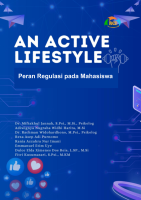
An Active Lifestyle: Peran Regulasi pada Mahasiswa
Synopsis
SPESIFIKASI BUKU
Harga : Rp 45.000
Ukuran : 14.8 cm x 21 cm
Jumlah Halaman : 79 hal
Ketebalan Buku : 1 cm
ISBN : On Proses
Deskripsi Buku :Buku ini hadir sebagai upaya untuk memberikan pemahaman mengenai pentingnya gaya hidup aktif bagi mahasiswa di tengah derasnya arus digitalisasi. Media sosial yang saat ini menjadi bagian tak terpisahkan dari kehidupan sehari-hari memiliki dampak yang beragam, baik positif maupun negatif, terhadap aktivitas fisik dan kesehatan mental. Dalam konteks inilah, regulasi diri berperan penting untuk membantu mahasiswa mengelola penggunaan media sosial sehingga tetap mampu menjaga keseimbangan hidup yang sehat, produktif, dan bermakna.
References
Prasetya, & Chow. (2023). The influence of social media on mental health and physical of adolescent athletes: A systematic review. Indonesian Journal of Kinanthropology (IJOK), 3(1), 28–34. https://doi.org/10.26740/ijok.v3n1.p28-34
Thygesen, K., et al. (2022). Social media use and its associations with mental health 9 months after the COVID-19 outbreak: A cross-national study. Frontiers in Public Health, 9, 752004. https://doi.org/10.3389/fpubh.2021.752004
Shimoga, S., et al. (2019). Associations of social media use with physical activity and sleep adequacy among adolescents: Cross-sectional survey. Journal of Medical Internet Research, 21(6), e14290. https://doi.org/10.2196/14290
Rote, A., et al. (2015). The efficacy of a walking intervention using social media to increase physical activity: A randomized trial. Journal of Physical Activity and Health, 12(Suppl 1), S88–S95. https://doi.org/10.1123/jpah.2014-0279
Sternberg, K., et al. (2021). Mental logout: Behavioral and neural correlates of regulating temptations to use social media. Psychological Science, 32(6), 913–928. https://doi.org/10.1177/09567976211001316
Kalinin, A., & Edguer, D. (2023). The effects of self-control and self-awareness on social media usage, self-esteem, and affect. Eureka, 2(3). https://doi.org/10.29173/eureka28781
Arness, D. C., & Ollis, T. (2023). A mixed-methods study of problematic social media use, attention dysregulation, and social media use motives. Current Psychology, 42(28), 24379–24398. https://doi.org/10.1007/s12144-022-03472-6
Maher, C., et al. (2015). A web-based, social networking physical activity intervention for insufficiently active adults delivered via Facebook app: Randomized controlled trial. Journal of Medical Internet Research, 17(7), e4086. https://doi.org/10.2196/jmir.4086
Tong, H. L., & Laranjo, L. (2018). The use of social features in mobile health interventions to promote physical activity: A systematic review. NPJ Digital Medicine, 1, 52. https://doi.org/10.1038/s41746-018-0051-3
Shiyab, A., et al. (2023). The impact of social media interventions on weight reduction and physical activity improvement among healthy adults: Systematic review. Journal of Medical Internet Research, 25(5), e38429. https://doi.org/10.2196/38429
Bandura, A. (1991). Self-regulation and the development of human agency. New York: Guilford Press.
Duckworth, R. (2019). Self-regulation and physical activity: Exploring the links. Journal of Health Psychology, 25(5), 639–649. https://doi.org/10.1177/1359105317725962
Tindle, H., et al. (2020). Social media use and physical activity in adolescents. Journal of Physical Activity and Health, 14(3), 183–192. https://doi.org/10.1123/jpah.2016-0455
Baumeister, R. F., & Vohs, K. D. (2020). Self-regulation and physical health: A framework for understanding. Psychology & Health, 35(4), 466–481. https://doi.org/10.1080/08870446.2019.1707827
Przybylski, A. K., et al. (2021). Motivational, emotional, and behavioral correlates of fear of missing out. Computers in Human Behavior, 29(4), 190–198. https://doi.org/10.1016/j.chb.2013.02.014
Lupton, L. (2019). The commodification of health and the risk society. Health, Risk & Society, 16(3), 1–16. https://doi.org/10.1080/13698575.2019.1577433
Roth, E., & Jeffries, J. (2022). Self-regulation in physical activity and health promotion. Sport and Exercise Psychology Review, 12(2), 35–45.
Pate, R., et al. (2020). Physical activity and public health: A recommendation from the CDC. JAMA, 273(5), 402–407. https://doi.org/10.1001/jama.1995.03520290054029
Bandalos, M. (2019). Measurement theory and applications for the social sciences. New York: Guilford Press.
Pate, M., et al. (2022). Physical activity guidelines for Americans. American Journal of Preventive Medicine, 44(3), 237–246. https://doi.org/10.1016/j.amepre.2012.10.031
Smith, J. (2021). Health promotion through physical activity. Journal of Public Health, 28(4), 101–110. https://doi.org/10.1093/pubmed/fdaa001
Dibb, S. (2019). Social media use and perceptions of physical health. Heliyon, 5(3), e01889. https://doi.org/10.1016/j.heliyon.2018.e00989
Rais, M., et al. (2022). The influence of Android-based digital comics on the social skills to prevent COVID-19 through student social interaction. Journal of Educational Science and Technology (EST), 8(3), 37318. https://doi.org/10.26858/est.v8i3.37318
Oyeyemi, A., et al. (2016). Patterns and associated factors of physical activity among adolescents in Nigeria. PLoS ONE, 11(2), e0150142. https://doi.org/10.1371/journal.pone.0150142
Althoff, T., et al. (2017). Large-scale physical activity data reveal worldwide activity inequality. Nature, 547(7663), 336–339. https://doi.org/10.1038/nature23018
Marques, A., et al. (2020). Prevalence of physical activity among adolescents from 105 low, middle, and high-income countries. International Journal of Environmental Research and Public Health, 17(9), 3145. https://doi.org/10.3390/ijerph17093145
Pengpid, S., & Peltzer, K. (2019). Sedentary behaviour, physical activity and life satisfaction, happiness and perceived health status in university students from 24 countries. International Journal of Environmental Research and Public Health, 16(12), 2084. https://doi.org/10.3390/ijerph16122084
Martinez, A. G., Gietzen, L., & McDaniel, V. F. (2024). Exploring the role of physical activity influencing emotional regulation and mental health in adolescents. Pacific Journal of Health, 7(1), 1–18. https://scholarlycommons.pacific.edu/pjh/vol7/iss1/1
Chen, H., Wang, C., Lu, T., Tao, B., Gao, Y., & Yan, J. (2022). The relationship between physical activity and college students’ mobile phone addiction: The chain-based mediating role of psychological capital and social adaptation. International Journal of Environmental Research and Public Health, 19(15), 9286. https://doi.org/10.3390/ijerph19159286
Ye, Z., Zhang, T., Peng, Y., Rao, W., & Jia, P. (2025). Effects of physical activity on smartphone addiction in Chinese college students: Chain mediation of self-control and stress perception. BMC Public Health, 25(1), 1532. https://doi.org/10.1186/s12889-025-22720-5
Reinecke, L., Gilbert, A., & Eden, A. (2022). Self-regulation as a key boundary condition in the relationship between social media use and well-being. Current Opinion in Psychology, 45, 101296. https://doi.org/10.1016/j.copsyc.2021.10.012
Asghar, A., Haneef, M., Dhillon, N. R., & Jan, R. (2024). The influence of social media use on academic performance: Exploring the role of cognitive load, self-regulation, and motivation among students. Review of Applied Management and Social Sciences, 7(4), 725–740.
Bennett, D., Feng, F., & Mekler, E. D. (2025). Autonomous regulation of social media use: Implications for self-control, well-being, and UX. Proceedings of the ACM Conference on Human Factors in Computing Systems (CHI).
Published
August 29, 2025
Copyright (c) 2025 Perkumpulan Rumah Cemerlang Indonesia
Details about the available publication format: Pratinjau Buku
Pratinjau Buku
Physical Dimensions
Details about the available publication format: Beli Buku
Beli Buku


